
Future e-waste will destroy itself
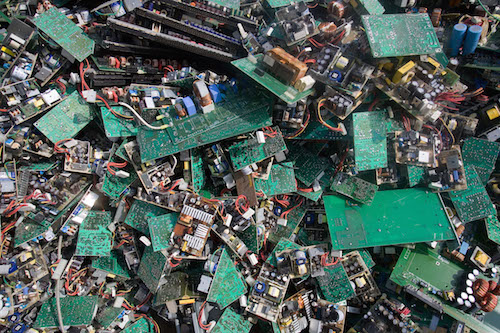
Future e-waste will destroy itself
Heat triggered, self-destructing electronics have been developed by researchers from the University of Illinois in order to combat the waste that is created when discarding old and broken electronics. They also developed a radio controlled trigger, which can remotely control self-destruction on demand.
“This is a way of creating sustainability in the materials that are used in modern-day electronics. This was our first attempt to use an environmental stimulus to trigger destruction,” Scott R. White, an aerospace engineering professor involved in the project, said.
The team looked at other ways to self-destruct e-waste, looking at ultraviolet light, heat, and mechanical stress. The main purpose was find ways to break down electronic devices so that manufacturers can recycle expensive materials or allow electronics to breakdown in landfills.
How does it actually work? The heat triggered devices are coated with a wax that contains a weak acid. When the devices are heated, the wax melts, releasing the acid onto the device. This acid completely dissolves the device quickly and efficiently. To do it remotely, a radio-frequency receiver and an inductive heating coil are placed within the device. A signal is then sent to the receiver which causes the coil to heat up, melting the wax and releasing the acid.
The thickness of the wax, concentration of the acid, and the temperature are all factors that determine how fast the device can degrade.
“We took our ideas in terms of materials regeneration and flipped it 180 degrees,” White said. “If you can't keep using something, whether it's obsolete or just doesn't work anymore, we'd like to be able to bring it back to the building blocks of the material so you can recycle them when you're done, or if you can't recycle it, have it dissolve away and not sit around in landfills.”

